


Categories
Charlotte News, Living In Charlotte, New DevelopmentsPublished November 14, 2026
I-77 South Express Lanes: What Does the $300 Million Deal Mean for Charlotte Homebuyers?

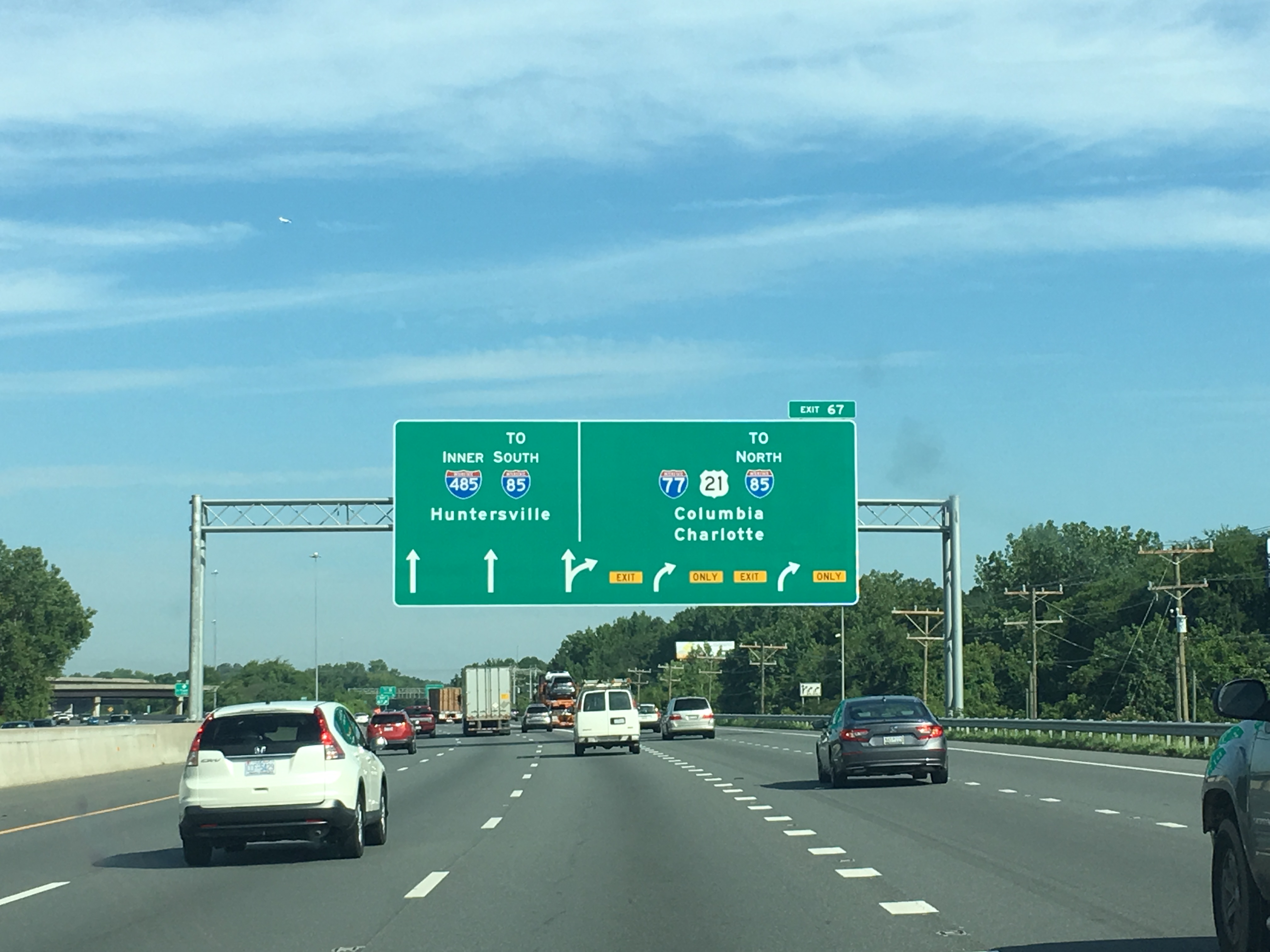
Charlotte's I-77 South Express Lanes proposal is about more than a faster drive. It is a major highway investment, a long-term toll arrangement and a community-benefits commitment affecting the neighborhoods along the corridor. The latest RealizeCharlotte episode breaks down the deal and what buyers should check before making a home decision around it.
What would the I-77 South project change?
The proposal covers about 11 miles between the South Carolina state line and the Brookshire Freeway near Uptown. It would add two express lanes in each direction, rebuild interchanges and aging bridges, and create express-lane access points and connectors. Existing general-purpose lanes would remain free under NCDOT's published access policy.
That makes the project relevant to people driving from Steele Creek, Fort Mill and Rock Hill into Charlotte, as well as residents of west and southwest Charlotte who live beside the highway. Those groups may experience the project differently: a paid travel option for a commuter is not the same benefit as a quieter street, a safer crossing or stable access for a nearby home.
Is the price really $4 billion, and when would construction start?
The video's headline reflects the multibillion-dollar estimates surrounding the project. The Charlotte Observer reported on November 7 that estimates ranged from $3.2 billion to $4.3 billion. That is a planning range, not a final construction contract price.
The more recent NCDOT project page, updated November 12, says an updated total-cost estimate is being prepared. It lists up to $600 million in state funding, with private capital bridging the remaining gap through a public-private partnership.
Timing deserves the same care. Earlier statements discussed construction in the early 2030s. The current official timeline now lists construction as TBD, with final design and developer selection targeted for late 2027. Those future milestones remain subject to change. Do not buy a home on the assumption that the finished lanes will be available by a particular move-in or resale date.
What does the $300 million community-benefits commitment cover?
The September 22 memorandum of agreement between Charlotte and NCDOT commits to a minimum of $300 million in community benefits generated through the private-partner procurement process. It calls for a final plan with measurable commitments, timelines and responsible parties, and for those benefits to be incorporated into the developer agreement.
The agreement includes cap-and-stitch treatments to reconnect the corridor, food-access facilities, a southwest-corridor recreation center, environmental improvements, housing stability and economic mobility. A cap can create usable space over part of a highway; stitching can improve connections across it. The agreement identifies at least $150 million for cap-and-stitch treatments and at least $50 million for a regional recreation center in underserved southwest areas such as Steele Creek and Nations Ford.
These are commitments to develop and deliver benefits, not evidence that a park, recreation center or grocery facility has opened. Exact sites, design, implementation and the final benefits plan still matter. NCDOT's current schedule targets the final benefits submission for mid-2027. The separate $100 million in toll-project bonus allocation for local infrastructure should not be confused with this $300 million commitment.
Would the toll rules be the same as I-77 North?
Do not assume the northern project's prices or contract terms will simply carry south. NCDOT's published access provisions call for toll-rate caps, a qualifying low-income discount program and toll-free express-lane access for vehicles with at least three occupants, public transit and emergency responders.
The project's financial key terms describe a pricing framework tied to utilization and traffic conditions, including circumstances where tolls could rise beyond an operational rate. That is not a published, single-dollar ceiling for every trip. A final commuting budget needs actual adopted rates and program details, not an estimate borrowed from another road.
What should homeowners near the corridor check?
Start with the exact parcel and access route. NCDOT's project maps are labeled preliminary, not final. Its November 6 update says preliminary design is roughly 10% to 15% complete and subject to refinement. An early map should not be treated as a final acquisition notice, or as a guarantee that a property will never be affected.
- Review the latest maps for the home, nearby ramps and cross-street connections.
- Ask how potential construction could affect driveway access, noise and the routes you use every day.
- Compare recent sales for similar homes, including their distance from the highway, rather than assume a uniform price gain or loss.
- Test today's commute during your actual work hours and make sure the home works before future lanes arrive.
- Track named sites, funding milestones and delivery dates for community benefits.
For property-specific questions, NCDOT's Community Engagement Center reopened at 1023 W. Morehead Street, Suite 150. The November 6 announcement lists weekday in-person and virtual access and Saturday virtual appointments, subject to holiday schedules. Use the project team's current resources before relying on a particular parcel-impact assumption.
Could the project raise nearby home values?
It could change access and neighborhood amenities, but the direction and size of any home-price effect are not guaranteed. Construction disruption, highway proximity, the eventual toll cost and the delivery of local improvements all matter. For a buyer or seller, the practical approach is to value the home using current comparable sales and treat future benefits as uncertain until their details are settled.
Where can you watch the full I-77 South episode?
Watch the full RealizeCharlotte I-77 South episode on YouTube.
Photo: the I-485 interchange with I-77 south of Charlotte, photographed June 27, 2019, by Dough4872 via Wikimedia Commons, licensed CC BY-SA 4.0. Photo unchanged. Historical road photo, not a rendering of the proposed express lanes.
Connect With RealizeCharlotte
📱 Instagram | TikTok | YouTube
https://instagram.com/realizecharlotte
https://tiktok.com/@realizecharlotte
https://youtube.com/@realizecharlotte
Work With the Jay White Team
Buy • Sell • Invest • Build Your Career
🤝 Careers: https://thejaywhiteteam.com/careers
or another way